What Is Open Insurance? A Beginner’s Guide
Published: July 2025
In recent years, the insurance sector has begun to undergo the same technological transformation that reshaped banking. You may have heard the term “Open Insurance”, but what exactly does it mean? If you’re not a technical expert, it can sound intimidating. The reality is far simpler—and far more exciting. In this guide, we’ll break down what Open Insurance is, why it matters, and how it can benefit insurers, businesses, and consumers alike.
Understanding Open Insurance
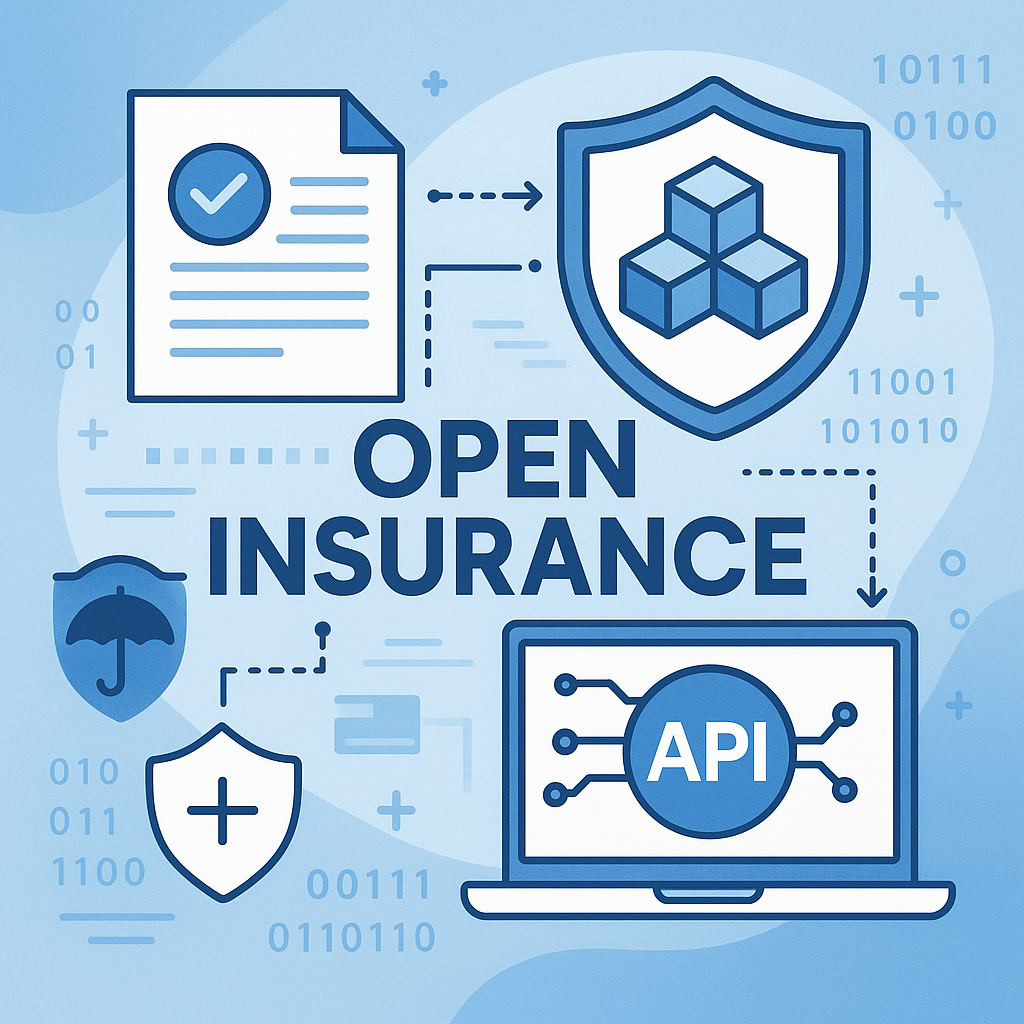
Open Insurance is about making insurance data and services accessible through secure, standardised interfaces known as APIs (Application Programming Interfaces).
In traditional insurance, customer data, policies, and claims are usually locked inside each insurer’s own systems. If you want to share information with a broker, switch providers, or compare offers, it often involves long phone calls, piles of paperwork, and slow processes.
Open Insurance is designed to change this by allowing insurers to safely share data and services with authorised third parties, such as:
- ✅Comparison websites
- ✅InsurTech startups
- ✅Regulatory bodies
- ✅Business partners
This sharing is only done with customer consent and through secure digital connections.
Think of Open Insurance as the next logical step after Open Banking, where regulated APIs have transformed how people access their financial data.
In much the same way, Open Insurance can create a more transparent, competitive, and customer-focused market.
How Does It Work?
One powerful psychological principle shaping trust is the Halo Effect. If someone sees positive reviews or professional visuals, they are more likely to assume other aspects of your brand are trustworthy. This cognitive shortcut works both ways—a single negative impression can overshadow dozens of positive ones.
At its core, Open Insurance relies on APIs, which are like digital bridges between systems.
Here’s a simple example:
Imagine you want to buy car insurance. You visit a comparison website, which uses APIs to:
- ✅ Retrieve quotes in real time from different insurers
- ✅ Access your driving history (with your consent)
- ✅ Confirm your no-claims discount instantly
- ✅ Show you the best options in seconds
Instead of manually inputting endless details and waiting for responses, the API connections do all the heavy lifting.
Key features of Open Insurance APIs include:
- ✅Standardisation: Data is shared in a consistent format.
- ✅Security: Only authorised parties can access information.
- ✅Consent: Customers must approve data sharing.
- ✅Real-time access: Instant data retrieval improves user experience.
Why Does Open Insurance Matter?
Open Insurance is important for a few key reasons:
1. Customer Empowerment
People increasingly expect on-demand, personalised services in every aspect of their lives. Open Insurance gives customers more control over their data and the freedom to:
- ✅Compare products quickly
- ✅Move between insurers seamlessly
- ✅Access innovative services tailored to their needs
2. Increased Competition
When data is locked away in silos, established insurers hold all the power. Open Insurance levels the playing field by allowing smaller companies and startups to build products that integrate with the larger ecosystem.
This creates:
- ✅More competition
- ✅Better pricing
- ✅New, customer-friendly services
3. Innovation Open Insurance paves the way for creative solutions, such as:
- ✅Apps that automatically adjust cover based on lifestyle changes
- ✅AI-powered claims assessments
- ✅Usage-based insurance policies (for example, pay-as-you-drive)
- ✅Embedded insurance products sold within other services
4. Regulatory Alignment
Around the world, regulators are moving towards data portability and consumer rights frameworks.
In Europe, for example, the General Data Protection Regulation (GDPR) already gives consumers the right to access and share their own data.
Open Insurance provides the tools and standards to comply with such regulations more effectively.
Is Open Insurance Safe?
Security and trust are at the heart of Open Insurance.
While the idea of sharing data can feel daunting, APIs are designed with robust security measures, such as:
- ✅Encryption of all data transfers
- ✅Secure authentication of all third parties
- ✅Detailed audit trails of who accessed what information
It is also important to remember that data sharing is always based on consent. Customers must give explicit permission for any third party to access their records.
Who Benefits from Open Insurance?
Consumers:
- ✅Easier access to insurance products
- ✅Faster claims handling
- ✅More personalised cover
Insurers:
- ✅Opportunities to reach new customers
- ✅Improved customer satisfaction
- ✅Simplified compliance
Brokers & Partners:
- ✅Ability to build value-added services
- ✅Streamlined integrations with insurers
Real-World Examples
Many insurers and technology providers are already embracing Open Insurance:
- ✅In the UK, comparison platforms increasingly rely on API integrations to deliver live quotes.
- ✅In the EU, regulators are developing frameworks similar to Open Banking for insurance.
- ✅Innovative startups are building apps to help people manage all their insurance policies in one place.
These examples show how Open Insurance is not a distant concept — it is happening right now.
How to Get Started
If you are an insurance professional or business owner, now is the time to explore Open Insurance.
Here are a few steps you can take:
- ✅Assess your readiness: Review your existing systems to see how easily they can integrate with APIs.
- ✅Consider partnerships: Look for technology partners who can help you build secure, customer-focused solutions.
- ✅Educate your team: Ensure everyone understands the principles of data security, consent, and compliance.
- ✅Start small: Pilot an Open Insurance initiative before rolling it out widely.
"We are building the future of insurance: structured, transparent, intelligent, and next-gen."
Conclusion
Open Insurance is more than a buzzword. It is a practical shift towards a fairer, more efficient insurance ecosystem. By giving customers more control over their data and unlocking new possibilities for innovation, Open Insurance has the potential to transform the industry—just as Open Banking transformed finance.
Whether you are an insurer, a broker, or simply someone who buys insurance, understanding this change is essential.
Ready to Learn More?
At Bernalo, we specialise in building secure, open, and intelligent insurance solutions, including sandbox environments and API integrations.
📣If you’d like to explore how Open Insurance could benefit your business, contact us today.
Let’s build the future of insurance together.